


.38 / .357 (.357 / 9.07 mm) Bullets
- Low shipping cost, worldwide delivery
- Fast delivery
- Secure order and payment
Overige categorieën in Reloading
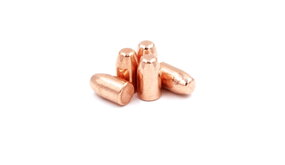
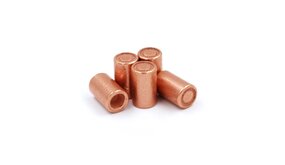
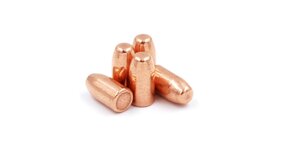
.38 / .357 (.357 / 9.07 mm) bullets for reloading
Bullets in the .38 / .357 category typically have a diameter of .357 inch, which is approximately 9.07 mm. This diameter is commonly used for reloading .38 Special and .357 Magnum cartridges.
Although .38 Special and .357 Magnum use the same bullet diameter, they are different cartridges. Case length, usable case capacity and permitted pressure levels differ. Always use load data developed specifically for the exact cartridge, bullet and other components being used.
Which cartridges use .357 bullets?
Bullets with a diameter of approximately .357 inch are used in various revolver and lever-action cartridges. The best-known examples include:
- .38 Special – a widely used rimmed cartridge for revolvers and certain lever-action rifles.
- .357 Magnum – a longer cartridge with a higher pressure level than .38 Special.
- .38 Special Wadcutter – a load using a deeply seated wadcutter bullet, commonly used for paper target shooting.
- .357 Maximum – a longer cartridge within the same calibre group that requires separate load data.
Depending on their dimensions and the applicable load data, certain .357 bullets may also be suitable for other cartridges. Always check official cartridge specifications, bullet data and a reliable reloading manual.
Why does .38 Special use a .357-inch bullet?
The designation .38 Special does not directly describe the modern bullet diameter. The name originates from older .38 cartridges and historical measuring methods. Modern .38 Special cartridges normally use bullets with a diameter of approximately .357 inch.
The designation .357 Magnum more accurately reflects the bullet diameter. This is why .38 Special and .357 Magnum can use the same bullet diameter even though the cartridges themselves differ considerably.
Different types of .38 / .357 bullets
Bullets for .38 Special and .357 Magnum are available in various profiles and constructions. The correct choice depends on the cartridge, firearm, barrel and intended purpose of the loaded ammunition.
- Wadcutter – a cylindrical bullet with a flat front that cuts clearly defined holes in paper targets.
- Semi-Wadcutter – combines a flat nose and pronounced shoulder with a tapered front section.
- Round Nose – a traditional bullet profile with a rounded nose.
- Flat Point – has a flat front and is commonly used in revolver and lever-action cartridges.
- Hollow Point – features a cavity in the nose and is available in different jacket constructions.
- Soft Point – has a partially exposed lead tip.
- Copper-plated bullets – coated with a thin layer of copper around the core.
- Full Metal Jacket bullets – have a jacket covering most of the core.
- Cast lead bullets – available in different hardness levels, diameters and profiles.
- Monolithic bullets – manufactured from a single material such as copper or a copper alloy.
Wadcutter bullets for .38 Special
Wadcutter bullets are widely used in .38 Special cartridges for paper target shooting. Their flat front creates a clearly defined hole in the target.
A wadcutter is often seated deeply in the case. This keeps the overall cartridge length compact, but the bullet occupies a relatively large amount of case space. Seating depth therefore has an important influence on usable case capacity and pressure development.
Use only load data developed for the exact wadcutter type. Hollow-base wadcutters, double-ended wadcutters and bevel-base wadcutters may differ in length, profile and recommended seating depth even when they have the same weight.
Semi-Wadcutter and Flat Point bullets
Semi-Wadcutter bullets have a pronounced shoulder and flat nose. This profile is suitable for various .38 Special and .357 Magnum loads and generally produces clearly defined holes in paper targets.
Flat Point bullets also have a flat front, but often lack the pronounced shoulder of a Semi-Wadcutter. This profile is available in lead, copper-plated and jacketed versions.
When used in a lever-action rifle, the bullet profile, overall cartridge length and crimp must also support reliable feeding from the magazine.
Choosing the correct bullet weight
Bullet weight is measured in grain. Various bullet weights are available for .38 Special and .357 Magnum. The range extends from lighter bullets to heavier designs, but not every weight is suitable for every load or firearm.
Lighter bullets generally occupy less space inside the case and may require different powders and charges than heavier bullets. Heavier bullets are often longer and may therefore be seated more deeply.
Bullets of the same weight are not necessarily interchangeable. A cast lead, copper-plated, jacketed or monolithic bullet may have a different length and construction at the same weight. This affects seating depth, crimp and usable case capacity.
Bullet diameter and fit
The standard diameter within this category is .357 inch. With cast lead bullets, slightly different diameters may be used depending on the barrel, cylinder throats and published load data.
Correct fit helps provide an effective seal in the barrel. An undersized bullet may not seal properly, while an oversized bullet can create problems during seating, chambering or pressure development.
When in doubt, measure the relevant dimensions of the firearm and follow the recommendations of the bullet manufacturer and the selected load data.
Differences between .38 Special and .357 Magnum
.38 Special and .357 Magnum generally use the same bullet diameter, but the .357 Magnum case is longer. As a result, a .357 Magnum cartridge cannot be fully inserted into a chamber designed only for .38 Special.
A revolver or lever-action rifle that has been approved by the manufacturer for .357 Magnum can generally also use suitable .38 Special cartridges. Always check the calibre marking and instruction manual of the specific firearm.
Load data for .38 Special and .357 Magnum must never be interchanged. Differences in case capacity and pressure require separate load development.
Cartridge length and seating depth
Overall cartridge length is determined by the case, bullet and seating depth. In revolvers, the cartridge must fit completely inside the cylinder without protruding from the front.
In lever-action rifles, the cartridge must also feed reliably from the magazine into the chamber. A cartridge may fit in the chamber but still cause feeding problems because of unsuitable overall length or bullet profile.
Deeper seating reduces usable case capacity and may affect pressure development. Change seating depth only when supported by reliable load data.
Crimping .38 Special and .357 Magnum
.38 Special and .357 Magnum are rimmed cartridges. Many bullets for these calibres have a crimp groove or cannelure that allows a roll crimp to be applied.
The crimp helps hold the bullet in position and can contribute to consistent ignition. This is particularly important with heavier .357 Magnum loads and cartridges used in the tubular magazine of a lever-action rifle.
The crimp must not unnecessarily deform the case or bullet. Adjust it according to the bullet construction, the location of the crimp groove and the applicable load data.
Lead, copper-plated and jacketed bullets
Cast lead, copper-plated and jacketed bullets cannot automatically be used with the same load data. Their construction and friction in the barrel differ.
Copper-plated bullets have a relatively thin copper layer. The manufacturer may specify velocity limits and restrictions on crimp strength. An excessively heavy crimp can damage the copper plating.
Use suitable load data for each bullet construction. Do not automatically use a powder charge developed for a jacketed bullet with a lead or copper-plated bullet of the same weight.
Use in revolvers and lever-action rifles
.38 Special and .357 Magnum are used in revolvers and certain lever-action rifles. The requirements placed on a completed cartridge may differ between firearm types.
In revolvers, cylinder length, chamber dimensions and the transition to the barrel are important. In lever-action rifles, magazine operation, cartridge feeding and overall cartridge length also play a role.
Always check whether the bullet profile is suitable for the type of magazine being used. Follow the instructions provided by the firearm and component manufacturers.
What should you consider?
- Check that the bullet has the correct diameter for the firearm and cartridge.
- Use only current load data for the exact cartridge and selected bullet.
- Never interchange load data for .38 Special and .357 Magnum.
- Consider the weight, length and construction of the bullet.
- Check the recommended seating depth and overall cartridge length.
- Confirm that the cartridge fits fully inside the cylinder.
- With a lever-action rifle, also test feeding from the magazine.
- Match the crimp to the bullet and its crimp groove.
- Do not substitute a different bullet of the same weight without checking the data.
- Use the primer type specified in the load data.
- Always begin with the recommended starting load from a reliable source.
- Inspect every completed cartridge carefully before use.
.38 / .357 bullets in different configurations
This category includes bullets for cartridges such as .38 Special and .357 Magnum. Available options may differ in diameter, weight, material, bullet profile and package quantity.
Always check the exact specifications on the individual product page and use reliable load data to determine whether the bullet is suitable for your cartridge, firearm and reloading project.
Related reloading components
SEM Jacht & Schietsport also supplies cartridge cases, primers, smokeless powder and other reloading components for .38 Special and .357 Magnum. Die sets, shell holders, reloading presses, scales and measuring tools are also available.
Legal information
In the Netherlands, bullets are subject to the same legal requirements as cartridge cases. A valid Dutch firearms licence or Dutch hunting licence listing a firearm in a suitable calibre is required for purchase.
Customers must present a valid Dutch firearms licence or Dutch hunting licence together with valid identification at the time of purchase. These products are supplied only when all applicable legal requirements have been met.
Why SEM Jacht & Schietsport?
SEM Jacht & Schietsport supplies .38 / .357 bullets for reloading cartridges such as .38 Special and .357 Magnum. The various bullet designs provide options for revolvers and suitable lever-action rifles.
By carefully comparing bullet diameter, weight, construction, seating depth and crimp, you can select a bullet that suits your reloading project. If you have questions about the available options, please contact us or visit our shop in Bornerbroek for personal advice.
